
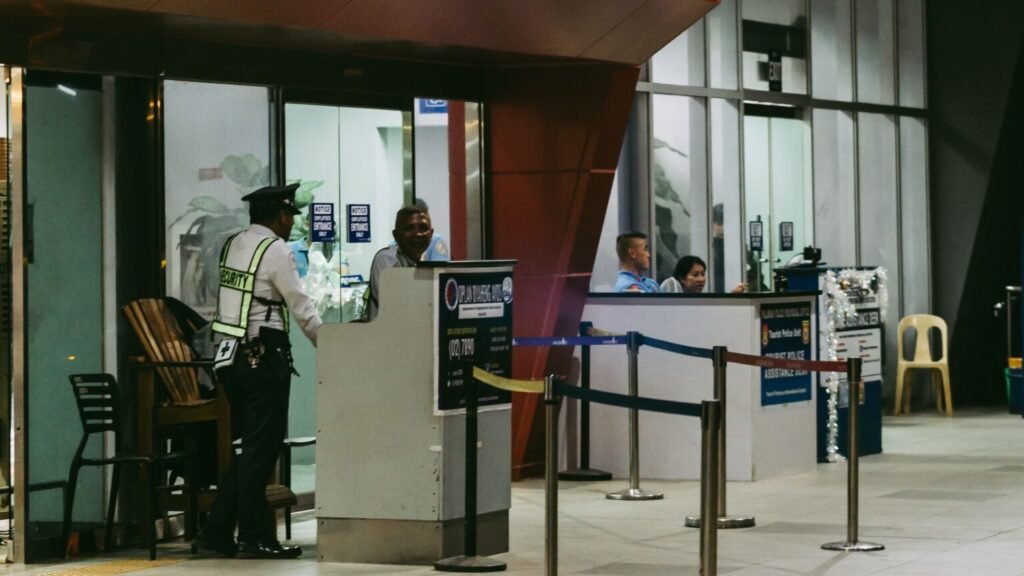
Airport security is one of those parts of flying that can take ten minutes one trip and make you wonder whether the line has actually moved on the next.
Wait times vary widely depending on the airport, time of day, passenger volume and travel season. During a quiet period, you may be through in less than 15 minutes, while holiday travel can push waits beyond an hour.
| Quick Answer Most travelers clear airport security in 15 to 45 minutes. Wait times may be under 15 minutes during slow periods and more than an hour during holidays, peak travel times, or when additional screening is required. |
How Long Should You Plan for Airport Security?
A reasonable starting point looks like this:
| Airport conditions | Typical time |
| Light travel period | 10–20 minutes |
| Average conditions | 20–40 minutes |
| Busy travel period | 45–60+ minutes |
| Additional screening | Several extra minutes to much longer |
| TSA PreCheck | Often faster, but not guaranteed |
These are planning ranges, not promises.
The airport, time of day, number of open screening lanes, passenger volume and whether you need additional screening can all change the answer.
And remember that security time is not the same as airport arrival time.
If someone tells you to arrive two hours before a domestic flight, that doesn’t mean TSA is expected to take two hours.
That larger window also has to cover parking, getting into the terminal, airline check-in if needed, checking luggage, walking to security and eventually reaching your gate.
What Actually Happens at Airport Security?
For most passengers, the process itself is fairly straightforward.
First comes identity and boarding-document verification.
Then your carry-on belongings are screened while you go through the passenger-screening equipment.
Depending on the checkpoint and your circumstances, that may involve a metal detector, imaging equipment or other screening procedures.
If nothing requires another look, you collect your belongings and head toward the gate.
A lot of the time you’re actually waiting for your turn rather than spending much time being screened.
That’s why a long line can make security take 45 minutes even though your own trip through the screening equipment takes only a few minutes.
Why Can the Same Airport Be Fast One Day and Slow the Next?
Security checkpoints don’t operate in isolation from the rest of the airport.
Early mornings can be particularly busy because many flights are scheduled within a relatively short departure window.
Late afternoons and evenings can also become crowded.
Then there are weekends, holidays, school breaks, spring break and summer vacation periods.
A large airport may have many screening lanes, but it also has many more passengers.
A smaller airport may have fewer travelers, but it may also have fewer screening lanes and employees.
Even the number of lanes open when you arrive can make a substantial difference.
This is why airport size alone doesn’t tell you how long security will take.
TSA PreCheck Can Help, but It Isn’t a Stopwatch
Travelers enrolled in TSA PreCheck often have access to dedicated screening lanes and simplified screening procedures at participating airports.
That can make a noticeable difference.
Eligible passengers generally don’t have to remove certain items such as shoes, belts and light jackets, and the screening rules for laptops and approved liquids are different from those in standard screening.
But PreCheck doesn’t guarantee a five-minute line.
A PreCheck checkpoint can still be busy, staffing can change, and airport conditions can affect everyone.
Think of PreCheck as a way to make the process more efficient, not as an appointment with TSA.
Your Carry-On Can Slow You Down
One of the easiest ways to turn a routine trip through security into a bag inspection is to pack something that requires a closer look.
Liquids, electronics and other carry-on items need to follow current TSA rules.
And prohibited items can lead to additional screening, bag inspections or having to decide what to do with an item before you’re allowed to continue.
If you’re uncertain about something unusual you’re packing, checking TSA’s current rules before leaving home is much easier than sorting it out at the checkpoint.
There’s another small advantage to packing sensibly: you don’t have to excavate your entire suitcase in front of a line of strangers if an officer needs you to locate something.
Have Your Identification Ready
Security isn’t the ideal place to discover that your identification is at the bottom of your bag.
Keep your identification and boarding information somewhere you can reach easily as you approach the checkpoint.
Travelers who arrive without acceptable identification may face additional verification and delays.
This is also one of those situations where preparation doesn’t necessarily save ten minutes for you, but it helps keep the entire line moving.
Multiply a 30-second delay by dozens of passengers and suddenly everyone is standing still.
What About Shoes, Belts and Electronics?
Screening procedures can differ depending on the checkpoint, equipment and whether you’re using an expedited screening program.
So don’t assume that what happened on your last flight will happen exactly the same way this time.
Pay attention to the signs and instructions from TSA officers at the checkpoint you’re actually using.
If something needs to come out of your bag, have it accessible.
If it doesn’t, don’t unpack half your carry-on simply because that’s what you remember doing at another airport.
Following the instructions in front of you is usually faster than following airport-security habits from five years ago.
Additional Screening Can Change the Timeline
Some passengers or bags require additional screening.
That can include a closer inspection of carry-on items, swabs, additional identity verification, or a pat-down.
Sometimes it’s resolved quickly.
Other situations take longer.
If you’re selected for additional screening, there’s no dependable number of minutes you can add to your schedule and know exactly when you’ll be finished.
This is one reason arriving with a reasonable time cushion matters even if you normally fly through security.
Weather Can Affect Security Without Touching the Checkpoint
It might seem strange that weather would affect a security line inside an airport, but it can.
Severe weather can delay and reschedule flights, which changes when passengers move through the terminal.
Instead of travelers arriving in their normal waves, delayed passengers may mix with people arriving for later flights.
That can create congestion at airline counters, security checkpoints and gates even though TSA itself isn’t experiencing bad weather.
Airport delays have a way of spilling from one part of the terminal into another.
How Early Should You Arrive?
A common starting point is about two hours before a domestic flight and three hours before an international flight.
But those aren’t security-line estimates.
They’re broader airport-planning guidelines.
You may want more time if you’re traveling during a major holiday, using an unfamiliar or very large airport, checking bags, traveling with children, needing assistance or expecting unusually heavy airport traffic.
On the other hand, a traveler who has already checked in, has only a carry-on and knows a small airport well may move through the preflight process much more quickly.
The important thing is to work backward from the flight rather than asking only, “How long will TSA take?”
You still need enough time to get from security to the gate before boarding closes.
Domestic vs International Flights
For U.S. departures, the TSA screening process is generally similar whether you’re flying domestically or internationally.
International passengers may also need to show a passport and other travel documents during airline check-in or at the gate, so the entire preflight process can take longer even if the security line itself does not.
That is one reason to allow more time before an international departure.
If you’re trying to budget time for the steps before security, see How Long Does It Take to Check In for a Flight?
What If You’re Running Late?
This is when the security line suddenly appears three times longer than it really is.
If you think you may miss your flight, check the flight status and contact the airline as soon as practical.
Don’t assume that TSA can move you to the front simply because your flight is boarding.
And don’t count on the airline holding the aircraft because you’re still in the security line.
If you do miss the flight, rebooking, standby or same-day change options will depend on the airline, ticket and circumstances.
The better strategy is giving yourself enough time that an unexpectedly long security line is irritating rather than catastrophic.
A Few Things That Make Security Easier
You can’t make the line shorter by force of personality, but you can make sure you’re not the reason it stops.
Check TSA rules for anything unusual before packing.
Keep identification and boarding information accessible.
Organize your carry-on so items can be reached if necessary.
Use TSA PreCheck if you’re eligible and enrolled.
Pay attention to the instructions at the checkpoint instead of automatically doing what you did on your previous trip.
And during holidays or other heavy travel periods, give yourself some extra time.
None of these guarantees a short wait.
They simply remove some of the preventable delays.
Related Articles
If you are planning a trip, navigating airport procedures, or preparing travel documents, these related guides may also help:
- How Long Does It Take to Deplane a Flight?
- How Long Does It Take to Check In for a Flight?
- How Long Does It Take to Get Through Customs?
- How Long Does It Take to Board a Plane?
Frequently Asked Questions
How long does airport security usually take?
Airport security typically takes about 15 to 45 minutes. During light travel periods it may take less than 15 minutes, while busy periods can produce waits of an hour or longer.
Does TSA PreCheck guarantee a shorter line?
No. TSA PreCheck often provides faster screening and may have a shorter dedicated line, but passenger volume, staffing and airport conditions still affect wait times.
What time of day is airport security busiest?
Early morning departure periods can be particularly busy because many flights leave within a relatively short period. Late afternoons, holidays and major vacation periods can also produce heavy passenger volume.
Can weather make airport security lines longer?
Yes. Severe weather can disrupt flight schedules and cause passengers from delayed or rescheduled flights to overlap with later travelers, increasing congestion throughout the terminal.
What happens during additional screening?
Additional screening may include closer inspection of luggage, swabs, a pat-down or further identity verification. The amount of additional time varies.
How early should I arrive before my flight?
About two hours before a domestic flight and three hours before an international flight are common starting points. Those times cover the entire preflight process, not just security, so adjust for the airport, checked baggage, holidays and your own travel circumstances.
Quick Summary
Airport security typically takes 15 to 45 minutes, although the actual wait can range from less than 15 minutes to more than an hour.
Light travel periods may take around 10 to 20 minutes. Average conditions are often closer to 20 to 40 minutes, while busy travel periods can push security waits beyond 45 to 60 minutes.
TSA PreCheck often speeds up the process for eligible travelers, but it doesn’t guarantee a short line.
Passenger volume, time of day, holidays, staffing, the number of open lanes, additional screening, equipment issues and airport disruptions can all affect the wait.
The simplest approach is to arrive with enough time to absorb an ordinary delay, prepare your carry-on before leaving home and remember that the time you spend in security is only one part of the time you need at the airport.
Sources & References
- Transportation Security Administration (TSA) Travel Information
- Transportation Security Administration (TSA) PreCheck Program
- Federal Aviation Administration Passenger Travel Information
- U.S. Department of Transportation Aviation Consumer Resources
- Transportation Security Administration — DHS to End ‘Shoes-Off’ Travel Policy
- U.S. Department of State — International Travel Checklist
Editorial Review
Reviewed by the Quick Answer Guide Editorial Team
Last reviewed: October 2026
Quick Answer Guide publishes practical, research-based answers to common questions about money, technology, health, travel, home improvement, and everyday life. Content is reviewed using official government resources, educational institutions, industry publications, carrier documentation, and other authoritative sources when appropriate. Articles are updated periodically to improve accuracy and usefulness.