
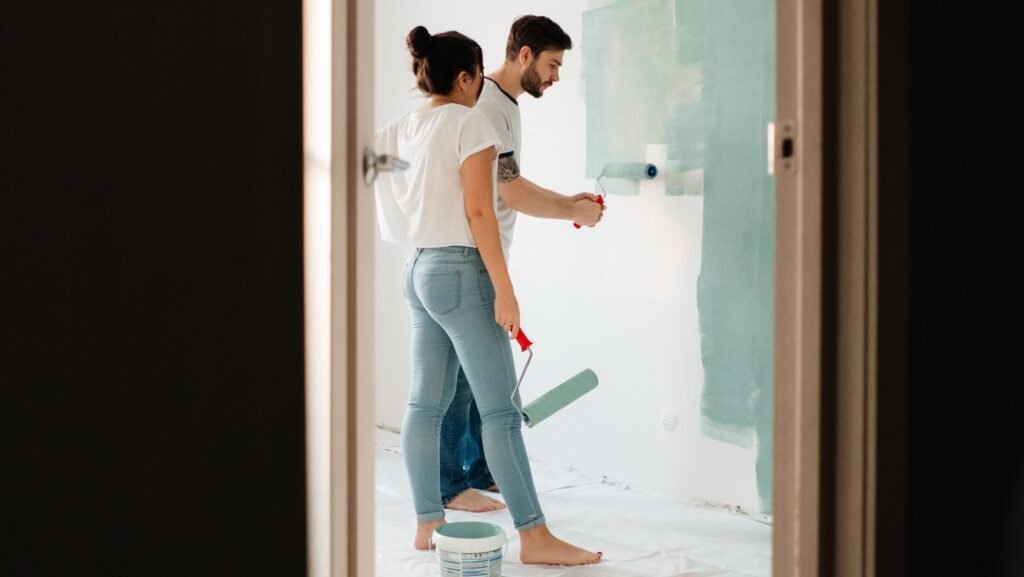
Painting a room may take anywhere from several hours to several days. A professional can often paint the walls in a clean, average bedroom within four to six hours, while a DIYer may need six to ten active hours for two wall coats in a room that is already in reasonable condition. Once the ceiling, trim, door, repairs, and drying time are included, the same room can easily become a two- to four-day DIY project.
The scope matters more than the phrase “paint a room.” One person may mean rolling one fresh coat onto four prepared walls. Another may mean emptying the room, repairing cracks, priming stained areas, painting the ceiling, applying two wall coats, refinishing the baseboards and door, replacing switch plates, and cleaning everything afterward. Those are not the same project wearing different clothes.
For realistic planning, separate active work from waiting time. You may spend eight hours actually working and still need two calendar days because patching compound, primer, paint, caulk, or trim enamel must reach the required drying or recoat stage before the next step. Room size matters, but wall condition, number of coats, ceiling height, trim, color changes, and drying conditions often matter just as much.
Quick Answer
Painting the walls in a standard 10-by-12-foot room usually takes a professional approximately four to six hours or a DIYer approximately six to ten hours, assuming the room is already in reasonable condition. Painting two coats on the walls, including normal preparation and drying time, commonly takes one to two days.
Painting the complete room—including the ceiling, two wall coats, baseboards, window and door trim, and one door—typically takes two to four days for a DIYer. Extensive patching, damaged drywall, high ceilings, dark color changes, detailed woodwork, wallpaper removal, or slow drying conditions can extend the project further.
Typical Room Painting Timeline
| Project scope | Professional time | DIY planning time |
| One coat on prepared walls in a small room | 2–4 hours | 4–6 hours |
| Two coats on prepared walls in an average room | 4–8 working hours | 1–2 days |
| Walls plus ordinary patching and spot priming | 1 day | 1–2 days |
| Ceiling and two wall coats | 1–2 days | 2–3 days |
| Ceiling, walls, baseboards, window trim, door trim, and one door | 1–2 days | 2–4 days |
| Large room, open-plan area, high walls, or detailed trim | 2–4 days | 3–7 days |
| Room requiring extensive drywall repair or wallpaper removal | Several days or longer | Several days to multiple weekends |
These are planning ranges rather than guarantees. Paint, primer, patching compound, caulk, and repair materials each have their own drying and recoating requirements.
What Does “Painting a Room” Include?
Before estimating the schedule, decide which surfaces are actually being painted.
A room may include:
- Four walls
- The ceiling
- Crown molding
- Window trim
- Door casing
- One or more doors
- Built-in shelves
- Closet walls and ceiling
- Radiator covers or registers
- Decorative paneling or wainscoting
The walls are often the fastest large surface because a roller covers open areas efficiently. Ceilings require overhead work and additional protection. Trim has far less square footage but can consume hours because it is painted slowly with a brush and has many edges.
A room with two large windows, three doors, built-in shelves, and elaborate molding may take longer than a larger room with four uninterrupted walls.
Active Painting Time Versus Total Project Time
Active time includes moving furniture, covering the floor, cleaning, patching, sanding, masking, priming, cutting in, rolling, brushing trim, and cleaning tools.
Total project time also includes:
- Waiting for patching compound to dry
- Waiting for primer to dry
- Waiting for the first coat to reach its recoat time
- Allowing trim enamel to harden before doors or windows close
- Allowing paint to develop enough hardness before furniture returns
- Waiting for repairs, caulk, or stain-blocking products
That is why a room with eight hours of active work may still occupy parts of two days. The waiting is not wasted time; it is part of the coating system. A painter cannot negotiate with the recoat time because everyone would like dinner.
How Long Does Each Painting Step Take?
1. Planning and Gathering Materials
Allow 30 minutes to two hours.
Before painting day, determine the scope, surface condition, coating system, number of coats, sheen, and tools you will need:
- Which surfaces will be painted
- The condition of the existing surfaces
- Whether primer is required
- How many coats are expected
- Which sheen is appropriate
- Which brushes, rollers, covers, trays, extension poles, and ladders are required
Check that all cans are the correct product, sheen, color, and base. When multiple cans of the same color will be used, follow the manufacturer’s guidance for maintaining color consistency. Do not discover halfway around the room that one can is eggshell and the other is semi-gloss.
2. Moving Furniture and Protecting the Room
Allow 30 minutes to two hours.
Small furniture can be removed. Larger pieces may be moved toward the center and covered completely if that leaves safe access around the walls. Remove rugs, curtains, wall art, lamps, and fragile items.
Protect:
- Floors
- Remaining furniture
- Anything else paint is likely to find despite your confidence
Secure drop cloths so they do not create a ladder or walking hazard. Thin plastic can protect furniture, but an appropriate nonslip covering is generally more suitable underfoot.
3. Removing or Protecting Wall Hardware
Allow 20 minutes to one hour.
Remove curtain hardware, hooks, nails, and other items that will not remain. Label anything that must return to a particular location.
Switch and receptacle cover plates are often removed for a cleaner finish. Follow appropriate electrical safety procedures, keep paint away from electrical devices, and do not loosen or pull devices from their boxes merely to avoid careful cutting-in. Anyone uncertain about electrical safety should leave the covers in place and mask them carefully or obtain qualified help.
Do not paint over hinges, door hardware, smoke alarms, sprinkler components, electrical devices, or equipment labels.
4. Cleaning the Surfaces
Allow 30 minutes to two hours, longer for kitchens or heavily soiled rooms.
Paint performs best on a sound, clean, dry surface. Remove dust, cobwebs, dirt, grease, hand marks, and other contamination using the preparation method recommended by the selected coating manufacturer.
Pay attention to:
- Areas around switches
- Walls beside beds and sofas
- Fireplace soot
- Baseboards
- Door edges and trim touched by hands
Follow product instructions for cleaner dilution, rinsing, residue removal, ventilation, and drying. Do not mix cleaning chemicals.
5. Inspecting and Repairing Walls
Minor repairs may take one to three hours. Extensive repairs can add one or more days.
Common repairs include:
- Nail and screw holes
- Torn drywall paper
- Loose tape
- Cracks
- Water stains
- Peeling paint
Small holes may be repaired quickly with a compatible patching product. Larger holes may require backing, drywall pieces, joint tape, multiple compound coats, wider feathering, and overnight drying.
Do not paint over an active leak or unexplained water damage. Correct the source and allow the assembly to dry before repairing and coating it.
Walls have a remarkable ability to look acceptable until they are empty and lit from the side. Once the artwork comes down, the room may reveal a history of every shelf, television mount, and enthusiastic furniture move.
6. Sanding and Dust Removal
Allow 30 minutes to three hours.
Sand repaired areas after the patching product has dried sufficiently. Feather rough paint edges, smooth runs, and dull glossy surfaces when the coating system requires it. The goal is a sound, smooth, compatible surface – not automatically stripping the entire room to bare drywall.
Use controlled sanding and avoid damaging drywall paper, trim profiles, or previously sound surfaces. Vacuum and remove dust using methods permitted by the primer or paint manufacturer. Dust left on the wall or trim will become part of the final finish.
Lead-Paint Warning for Older Homes
If the home was built before 1978, old paint may contain lead. The U.S. Environmental Protection Agency warns that sanding, scraping, or otherwise disturbing lead-based paint can create dangerous dust. EPA updated its lead-safe renovation guidance in March 2026 and continues to emphasize lead-safe work practices for pre-1978 housing; contractors performing covered work are subject to federal certification and work-practice requirements.
Do not begin aggressive sanding or scraping and investigate the age of the paint afterward. Evaluate the risk before disturbing an older coating and follow applicable federal, state, and local requirements.
7. Caulking Appropriate Gaps
Allow 30 minutes to two hours plus required drying time.
Paintable caulk may be used at appropriate stationary joints around trim or molding when the existing caulk has failed or a visible gap needs finishing. Remove loose material and prepare the joint according to the caulk instructions.
Do not caulk random wall cracks without determining their cause, moving joints that should remain open, window tracks, door clearances, or gaps required for ventilation or drainage.
Caulk must reach the manufacturer’s permitted painting stage before it is coated. A thick bead may take longer than a small seam.
8. Priming
Spot priming may take 30 minutes to two hours. Priming the entire room may take two to four hours plus drying time.
Primer may be needed for:
- Bare drywall or joint compound
- Torn drywall paper
- Repaired areas with different porosity
- Water, smoke, ink, or other stains
- Glossy or difficult existing coatings
- Drastic color changes
- Bare wood
- Tannin-prone wood
- Surfaces specified by the finish-paint manufacturer
Not every previously painted wall requires a full primer coat. Conversely, “paint and primer in one” does not eliminate every need for a dedicated primer. A finish product may provide good hide on a sound painted wall while still being the wrong material to seal a stain, stabilize damaged paper, or prepare a difficult glossy surface.
Allow primer to dry for the time specified on its label or technical data before recoating.
9. Painting the Ceiling
Allow two to four hours per coat for an average room.
When the ceiling is included, it is usually completed before the final wall coats so ceiling drips or spatter can be corrected. Protect the floor and furnishings more extensively than for walls alone.
Ceiling work includes:
- Cutting around the perimeter
- Cutting around light fixtures or other penetrations
- Rolling the open field
- Maintaining a wet edge
- Inspecting for missed areas and lap marks
Textured ceilings, high ceilings, stains, repairs, beams, coffers, or many fixtures add time. A ceiling changing from a dingy or dark color to bright white may need more than one coat.
Do not paint smoke alarms, sprinkler heads, vents, recessed-light interiors, or other equipment.
10. Cutting In the Walls
Allow one to three hours per coat for an average room.
Cutting in means brushing paint along ceilings, trim, inside corners, and other areas a roller cannot reach neatly. The number of windows, doors, built-ins, and color boundaries changes this time considerably.
Experienced painters may cut in faster and with less masking. A beginner should allow time to work carefully rather than trying to reproduce a professional video filmed at three times normal speed.
11. Rolling the Walls
Allow one to three hours per coat.
Roll the walls using the roller cover, nap, loading method, spread rate, and application technique recommended for the paint and surface. Work in manageable sections and maintain a wet edge.
Rough or textured walls hold more paint and roll more slowly than smooth drywall. Tall walls require an extension pole, ladder, scaffold, or other appropriate access equipment.
The first wall often moves slowly while the painter settles into a rhythm. The final wall may also move slowly because the painter has settled into questioning every life choice that led to painting behind a bookcase.
12. Waiting Between Coats
The recoat interval depends on the exact product and conditions.
Current examples illustrate why a universal answer is unreliable:
- Benjamin Moore lists approximately one hour to dry and one to two hours before recoating for several current Regal Select interior finishes under stated conditions.
- Sherwin-Williams says two to four hours is typical for many interior situations but directs users to check the specific paint label.
- A BEHR Pro i300 interior product data sheet lists one hour to touch, two hours to recoat, and two weeks for full cure at 77°F and 50% relative humidity, with times affected by temperature, humidity, and film thickness.
Those are examples, not interchangeable instructions. A primer, ceiling paint, wall paint, and trim enamel may all have different recoat times in the same room.
Wait longer when required by:
- Cooler temperatures
- Higher humidity
- Heavy application
- Limited air exchange
- Darker colors
- Less absorbent surfaces
- Manufacturer instructions
Paint that feels dry to one fingertip may not be ready for another roller coat.
13. Applying the Second Wall Coat
Allow two to five active hours, plus drying time.
A second coat improves color uniformity, hide, sheen consistency, and film build when required by the product and project. Very similar colors over sound walls may cover efficiently; strong changes, repairs, porous areas, or certain colors may need additional work.
Inspect the first coat under good lighting. Correct sanding dust, ridges, missed holes, or obvious defects before covering them again.
14. Painting Baseboards, Window Trim, Door Casing, and Doors
Allow three to eight hours per coat depending on detail.
Trim may take longer than the walls because every edge is brushed carefully. Doors add flat panels, profiles, edges, drying considerations, and hardware protection.
The order of wall and trim painting can vary with the painter’s method. Some painters complete ceilings, walls, and then trim. Others paint trim before the final wall coats because they prefer to cut the wall color to the finished trim. Either sequence can work when the products, drying periods, masking, and technique are coordinated.
Trim enamels may have longer recoat and cure periods than wall paint. A freshly painted door or window can stick if closed before the coating has developed enough hardness.
15. Removing Tape and Protection
Allow 30 minutes to two hours.
Remove masking materials according to the tape and coating instructions. Waiting too long may pull dried paint or create a ragged edge; removing too early may cause smears.
Fold coverings inward to contain dust and paint chips. Inspect floors, hardware, and fixtures before moving furniture back.
16. Touch-Ups and Cleanup
Allow one to three hours.
Inspect walls from different angles and under the room’s normal lighting. Correct small misses and edge issues using the same application method when possible. A brushed touch-up in the middle of a rolled wall can show a different texture or sheen.
Clean tools according to product instructions, label leftover paint, record the color and sheen, and store or dispose of materials properly.
How Room Size Affects Painting Time
Room dimensions are only the beginning of the estimate.
Small Room
A small bedroom, office, or bathroom may take:
- Walls only, one coat: 2–5 hours
- Walls only, two coats: 4–8 active hours
- Complete room: 1–3 days
Bathrooms can take longer than their square footage suggests because toilets, vanities, mirrors, tile, fixtures, and limited access create many edges.
Average Room
A 10-by-12-foot or 12-by-12-foot bedroom may take:
- Prepared walls, one coat: 3–6 hours
- Normal preparation and two wall coats: 1–2 days
- Ceiling, walls, trim, and door: 2–4 days for DIY
Large Room
A large living room or primary bedroom may take:
- Walls only: 1–2 days
- Complete room: 3–5 days for DIY
Open-plan rooms may have more wall area, multiple colors, tall stair openings, and no natural stopping points.
What Affects How Long It Takes to Paint a Room?
Wall Condition
Clean, sound walls are fast. Holes, cracks, stains, peeling paint, failed tape, or rough repairs add hours or days.
Number of Coats
Each additional coat adds cutting-in, rolling, inspection, and recoat time. Primer is a separate coat even when it is not the final color.
Color Change
Light-over-light color changes may be straightforward. Dark-to-light, light-to-dark, vivid reds, deep blues, bright whites, and other substantial changes may require a suitable primer or additional finish coat.
Paint Sheen
Higher-sheen finishes tend to reveal surface defects and application differences more readily than flatter finishes. That may require more preparation and careful touch-ups.
Ceiling Height
Standard eight- or nine-foot walls are faster than two-story foyers, vaulted ceilings, stairwells, or rooms with beams. Safe access setup can take longer than rolling the accessible wall area.
Trim and Architectural Details
Baseboards, crown molding, panel molding, wainscoting, built-ins, shutters, radiators, multiple windows, and several doors increase brush work.
Furniture
An empty room is faster and safer. Constantly shifting heavy furniture interrupts the workflow and reduces access.
Temperature, Humidity, and Airflow
Paint dries and cures within the environmental range specified by its manufacturer. High humidity and cool temperatures commonly extend drying and service times. Provide ventilation and air exchange according to label and indoor-air guidance, but avoid blowing dust directly across wet paint.
DIY Experience
Professionals prepare quickly, choose appropriate tools, load brushes and rollers consistently, and maintain a wet edge. A first-time painter may spend extra time masking, checking instructions, correcting drips, and climbing down the ladder for the tool that is always on the other side of the room.
How Long Does Paint Take to Dry and Cure?
Dry to the Touch
This is the point at which the surface no longer feels wet under the manufacturer’s specified conditions. It may occur within an hour for some waterborne wall paints, but that does not mean another coat can be applied or the wall can be scrubbed.
Ready to Recoat
This is the minimum time before another compatible coat may be applied. It may be one or two hours for some products and four hours or longer for others.
Ready for Normal Use
Furniture can often return after the room is dry enough to avoid contact damage, but it should not press against freshly painted walls. Doors and windows may require more time before closing normally if their contact surfaces were painted.
Fully Cured
Full cure is when the paint has developed its intended hardness and service performance. Many waterborne wall paints continue curing for days or weeks. Current BEHR PRO i300 product information lists a seven-day full cure under stated conditions, while Benjamin Moore technical data for certain Regal Select finishes says painted surfaces can be washed after two weeks. The exact product instructions take priority.
Follow the exact coating instructions before washing, scrubbing, applying adhesive decorations, or placing furniture tightly against a wall.
Can You Paint a Room in One Day?
Yes, when:
- The room is small or average
- Furniture has already been removed
- Walls are clean and in sound condition
- Repairs are minor and dry quickly
- The existing and new colors are similar
- Only the walls are being painted
- The selected paint permits same-day recoating
- Temperature and humidity meet the product requirements
- The painter works efficiently
A possible one-day schedule might be:
- 8:00–9:30 a.m.: Protect room, clean, and complete minor preparation
- 9:30–10:30 a.m.: Spot-prime repairs when permitted
- 10:30 a.m.–1:00 p.m.: Cut in and roll the first coat
- 1:00–3:00 p.m.: Allow required recoat time
- 3:00–5:30 p.m.: Apply the second coat
- 5:30–6:30 p.m.: Initial cleanup
This schedule works only when every product’s dry and recoat instructions support it. A ceiling, detailed trim, a door, extensive repairs, or slower-drying products can move the project into a second or third day.
How Long Does It Take to Paint Multiple Rooms?
Painting several rooms can be more efficient than multiplying the one-room time by the number of rooms. A painter or crew can prepare one room while another dries, use the same color across several spaces, and complete similar tasks in batches.
Approximate professional schedules may include:
- Two average rooms: 1–2 days
- Three or four rooms: 2–4 days
- Several rooms plus ceilings and trim: 4–7 days or longer
- Whole occupied interior: 1–3 weeks, depending on size and scope
A solo DIYer working weekends may need several weeks. Occupied rooms, furniture moving, children, pets, color changes, repairs, and daily cleanup add time.
Ways to Finish Painting More Efficiently
- Decide the exact scope before buying supplies.
- Move furniture and remove wall décor before painting day.
- Purchase enough compatible paint from the same color formula and sheen.
- Repair known wall damage in advance.
- Keep patching, primer, wall paint, and trim enamel instructions available.
- Use roller covers and brushes appropriate for the coating and surface.
- Provide product-approved temperature, humidity, ventilation, and drying conditions.
- Allow the full recoat period.
- Inspect each coat before applying the next.
Speed should come from preparation and an orderly sequence, not thinner coverage, overloaded rollers, or ignored drying times.
Common DIY Mistakes That Add Time
Underestimating Preparation
Painting begins before the can opens. Furniture, repairs, cleaning, sanding, protection, and primer may equal or exceed application time.
Painting Over Wet Repairs
Joint compound, patching material, or caulk that has not dried sufficiently can shrink, crack, flash, or disturb the finish coat.
Assuming Paint-and-Primer Solves Every Problem
Combined products can provide useful hide and coverage on suitable surfaces but do not replace specialized stain blocking, bonding, drywall sealing, or repair procedures in every situation.
Applying the Second Coat Too Soon
Recoating early can disturb the first coat, create texture problems, or extend overall curing.
Using Too Much Paint
An overloaded roller creates runs, heavy edges, spatter, and slow drying. Follow the manufacturer’s spread-rate and film-thickness guidance.
Letting Cut-In Paint Dry Too Far Ahead
Rolling while cut-in areas are still appropriately workable helps reduce visible picture-framing or texture differences. Work in manageable sections according to the paint’s application guidance.
Pushing Furniture Against Fresh Walls
Paint may feel dry but remain soft. Leave space between furniture and newly painted walls until the coating permits normal contact.
Should You Paint the Room Yourself or Hire a Professional?
DIY painting is generally reasonable when:
- The room has standard-height ceilings
- Wall repairs are minor
- The surfaces are sound
- Safe access is straightforward
- You have enough time for preparation and drying
- The finish does not involve complex decorative work
Professional painting deserves consideration when:
- The room has a vaulted ceiling, stairwell, or two-story wall
- Drywall repair is extensive
- Paint is peeling widely
- Smoke, water, or other stains require diagnosis and treatment
- The home may contain lead-based paint
- Trim is elaborate
- Several rooms must be completed quickly
- Furniture or household needs make a prolonged DIY project impractical
Professionals usually work faster because the process is familiar and tools are organized. Ask whether an estimate includes furniture moving, wall repairs, primer, number of coats, ceilings, closets, baseboards, doors, window trim, materials, and cleanup. “Paint the room” can become surprisingly negotiable once the estimate is written.
Related Articles
If you are working on painting, remodeling, or other home improvement projects, these related guides may also help:
- How Long Does It Take to Install Flooring?
- How Long Does It Take to Paint Cabinets?
- How Long Does It Take to Tile a Floor?
- How Long Does It Take to Pressure Wash a House?
- How Long Does It Take to Clean a House?
Frequently Asked Questions
How long does it take to paint a 10-by-12-foot room?
Painting two coats on prepared walls commonly takes four to eight active hours for a professional or one to two days for a DIYer. Adding the ceiling, trim, door, or substantial repairs may extend the project to two to four days.
How long should interior paint dry between coats?
Follow the label and technical data for the exact paint. Some current waterborne wall paints permit recoating in one or two hours under specified conditions, while others require two to four hours or longer. Temperature, humidity, airflow, color, and coat thickness can extend the time.
Does a room always need two coats of paint?
Not always. The required number depends on the paint, color change, existing surface, primer, application, and desired uniformity. Many projects receive two finish coats for consistent color and sheen.
Do you need primer before painting a room?
Primer may be needed over bare drywall, repaired areas, stains, glossy coatings, bare wood, difficult surfaces, or substantial color changes. A sound previously painted wall may not require full priming when the finish-paint manufacturer permits direct application.
Does paint with primer eliminate a separate primer coat?
Not in every situation. Paint-and-primer products may improve hide on suitable painted surfaces, but stains, bare materials, damaged drywall paper, glossy finishes, and bonding problems may require a specialized primer.
Can you sleep in a freshly painted room?
Follow the paint label, safety data, ventilation instructions, and any health guidance applicable to the occupants. Drying does not mean all emissions have ended. Children, pregnant people, individuals with respiratory conditions, and other sensitive occupants may need additional precautions or professional advice.
When can furniture go back after painting?
Furniture can often return after the paint is sufficiently dry and the room is safely ventilated, but it should not touch the walls. Follow the paint instructions and allow more time before placing heavy pieces tightly against newly coated surfaces.
When can newly painted walls be washed?
Wait until the selected coating permits cleaning. Benjamin Moore technical data for several Regal Select finishes says painted surfaces can be washed after two weeks. Other products may differ, so use the instructions for the exact paint. Early scrubbing can burnish or damage a finish that has not developed enough hardness.
Does humidity make interior paint dry more slowly?
Often, yes. Higher humidity and cooler temperatures commonly extend dry, recoat, and service times for waterborne interior paints. Follow the product’s permitted environmental range.
Is it faster to use a paint sprayer?
Spraying can apply paint quickly to open surfaces, but masking, containment, ventilation, overspray control, equipment setup, and cleanup take time. In an occupied furnished room, rolling may be more efficient overall.
Quick Summary
Painting the walls in a standard room usually takes a professional about four to six hours or a DIYer roughly six to ten active hours when the surfaces are already in reasonable condition. Normal preparation, two wall coats, and drying commonly spread the project across one or two days. Adding the ceiling, baseboards, window and door trim, and a door can turn the same room into a two- to four-day DIY project.
Room size matters, but wall condition, number of coats, ceiling height, windows, doors, trim, color changes, and drying conditions often matter more. The fastest-looking room can become a slow project when it needs repairs, stain blocking, detailed trim work, or long recoat intervals. Good preparation may include cleaning, repairing, sanding, dust removal, caulking appropriate gaps, and applying the correct primer.
Dry-to-touch time is not the same as recoat time, service time, or full cure. Check the exact paint, primer, patching, and caulk instructions before moving to the next stage, pushing furniture against walls, closing painted doors or windows, or washing the finish. Careful preparation and proper drying periods usually save more time than repairing a rushed paint job.
Sources & References
- Benjamin Moore: Regal Select Interior Paint Product Information
- Benjamin Moore: Regal Select Interior Paint Technical Data
- Sherwin-Williams: The Best Order to Paint a Room
- Sherwin-Williams: Interior Painting Frequently Asked Questions
- BEHR: Pro i300 Interior Paint Technical Data Sheet
- U.S. Environmental Protection Agency: Lead-Safe Renovations for DIYers
- U.S. Environmental Protection Agency: Indoor Air Quality During Remodeling
- Technical data, safety data, and application instructions for the selected cleaner, patching compound, caulk, primer, and paint
Editorial Review
Reviewed by Claire Bennett, Managing Editor
Last reviewed: October 2026
Quick Answer Guide publishes practical, research-based answers to common questions about money, technology, health, travel, home improvement, and everyday life. Content is reviewed using government resources, manufacturer technical data, professional trade guidance, industry publications, and other authoritative sources when appropriate. Articles are updated periodically to improve accuracy, clarity, and usefulness.