
Most people have their own comfort pattern when they fly. You may like to arrive early enough to check a bag, clear security, find your gate, grab a drink or coffee, get the kids something to eat, and use the restroom – whatever helps you feel settled before boarding begins.
Once you are at the gate, though, the question becomes much simpler: how long does it take to get everyone onto the plane? On a typical flight, the whole boarding process takes about 20 to 45 minutes. A small regional aircraft can be quicker, while a full large aircraft, a flight with heavy carry-on luggage, or an international flight can take longer.
That is the time for the airline to board the aircraft as a whole. For one passenger, the actual trip from the scanner to the seat is often only a few minutes. The rest of the time comes from the fact that everyone is using the same narrow aisle, finding seats, and trying to fit bags into shared overhead bins.
Quick Answer
Most planes board in roughly 20 to 45 minutes. A small regional flight may take 15 to 25 minutes; a full domestic single-aisle plane may need 35 to 50 minutes; and a larger international aircraft can take 35 to 60 minutes or more. These are useful planning ranges, not promised airline schedules.
The time shown in your airline app or on the boarding pass is the time that matters for your own flight. American Airlines, for example, says most of its flights begin boarding 30 to 50 minutes before scheduled departure and that boarding ends 15 minutes before departure. Other airlines use their own procedures and airport-specific deadlines.
Typical Total Boarding Time
The table below describes the time needed to board the entire aircraft, not the time one person spends walking onto it.
| Flight or situation | Typical total boarding time |
| Small regional aircraft | 15 to 25 minutes |
| Typical domestic single-aisle flight | 25 to 40 minutes |
| Full single-aisle flight with many carry-ons | 35 to 50 minutes |
| Wide-body or international flight | 35 to 60 minutes |
A flight can fall outside these ranges. Boarding by bus or outdoor stairs, a late aircraft, a crowded gate, an aircraft substitution, or an unexpected maintenance issue can change the schedule quickly.
Why One Flight Boards Faster Than Another
The plane itself makes a difference. A small regional aircraft has fewer people, but it may have smaller overhead bins and a single narrow entrance. A larger aircraft may have more passengers and more groups to call, yet it can also have more room and sometimes more than one boarding door. The number of passengers matters, but it is not the only thing that matters.
Carry-on luggage is one of the biggest reasons boarding slows down. When a bin fills, a passenger may need to turn around, look for another space, or have the bag checked at the gate. One person stopping in the aisle is not a major problem. Several people stopping at once can bring the line to a standstill.
Seat location and boarding groups matter, too. A passenger in a window seat may need to wait for someone in the aisle seat to stand up. Families may be getting children, strollers, car seats, and snacks settled. International travelers may have a document question at the gate. Some passengers need extra time or help boarding. Those are normal parts of travel, not mistakes or wasted time. The crew also has to make sure the aisle is clear and bags are safely stowed before the door can close.
What Has to Happen Before Boarding Starts
The plane can be sitting at the gate while several teams are still getting it ready. Passengers from the previous flight may be leaving while baggage and cargo are unloaded, the cabin is cleaned, supplies are loaded, and the next flight’s bags are brought aboard. The flight crew also has safety and departure work to complete.
Many of those jobs happen at the same time. Some cannot. If maintenance is checking something, the arriving flight is late, the cabin is still being cleaned, or the gate is waiting for a wheelchair or another special-service arrangement, boarding may start late. That does not automatically mean the flight will leave late, but it is a reason to remain close enough to hear changes.
What Boarding Usually Looks Like
The gate agent normally begins with preboarding for people who need extra time or assistance, then calls the airline’s priority groups and the remaining groups or zones. The exact order depends on the airline and ticket. It may be based on cabin, fare, loyalty status, seat location, or a combination of those things.
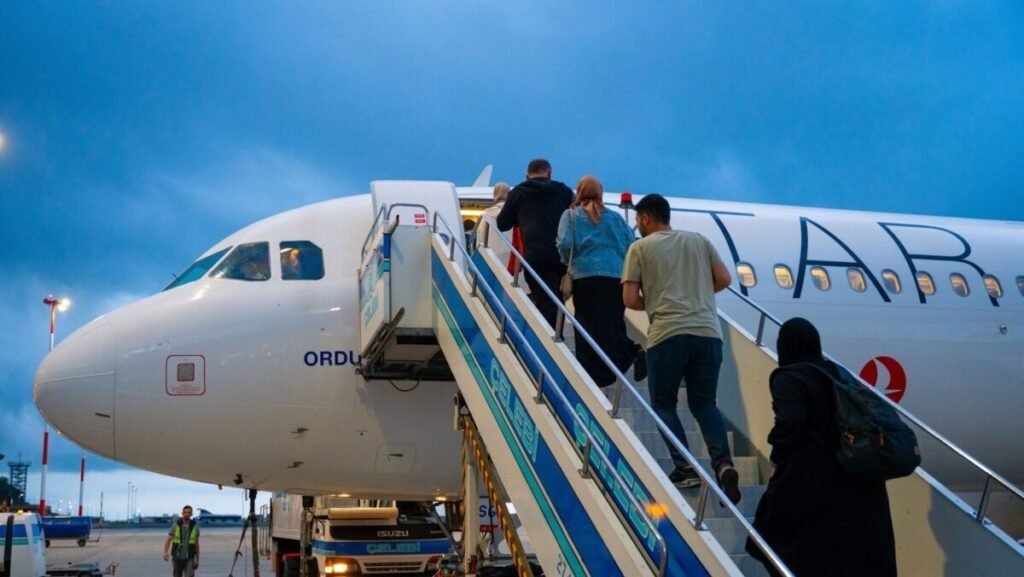
After the boarding pass is scanned, passengers move through a jet bridge, outdoor stairs, or sometimes a bus and stairs at a remote stand. Inside the aircraft, the slowest part is usually not the scan; it is the small chain of decisions that happens in the aisle: finding the row, lifting a bag, waiting for bin space, and getting everyone seated.
This is why boarding can look slow even when the line at the gate is moving. A passenger may scan in seconds and then wait in the jet bridge because the people ahead are still finding seats. Once you get to your row, the kindest and fastest approach is simple: have what you need in the smaller personal item, stow the larger bag, move into the row, and settle in after the aisle is clear.
Boarding Time Is Not Departure Time
A scheduled departure time is generally when the plane is supposed to leave the gate, not when a passenger can arrive at the gate. The airline still needs time to finish boarding, account for passengers, secure the cabin, close the door, and prepare for pushback. That is why a person can see an airplane sitting at the gate and still be too late to board.
There is no single deadline that fits every airline. American’s published procedure is one example: most flights begin boarding 30 to 50 minutes before departure and boarding ends 15 minutes before departure. Delta’s domestic guidance also says customers must be at the gate and ready to board 15 minutes before scheduled departure. Always follow the operating airline’s app, boarding pass, and gate announcement for the actual flight.
A boarding time can be earlier or later than you expected. If the plane and crew are ready, an airline may start a little early. If boarding begins late, do not assume you can wander away or calculate a new deadline on your own; the airline may call groups quickly and still try to close the door near the original schedule. The gate display and announcements are still important even when the app sends alerts.
What Happens After Everyone Is On Board
The last boarding-pass scan is not the same thing as departure. The crew still has to finish stowing bags, secure the cabin, account for passengers, close and secure the doors, and complete the work needed for pushback. A plane may then wait for baggage or cargo, a ramp crew, weather clearance, air-traffic flow restrictions, deicing, or maintenance approval.
This is also why the gate deadline matters. Once the door closes and the departure sequence is underway, the airline generally will not reopen it for a late passenger, even though the plane may remain visible at the gate for a while longer.
A Long Delay Is a Different Story
A long day at the airport does not always mean boarding itself took a long time. Here is a real-life example: on a three-hour trip to visit family, a small delay kept growing. The passengers were eventually told that the plane needed a repair part – and the part was in the very city they were headed to. It had to be flown back before their plane could leave, turning a slight delay into about nine hours at the airport.
That is unusual, but it shows why it helps to separate the normal boarding process from a flight delay. Maintenance, weather, a late incoming aircraft, crew issues, or gate congestion can keep a plane from leaving even after passengers are ready. A delay can also change the pace of boarding, so stay near the gate and keep checking the airline’s updates rather than assuming the original timing still applies.
How to Make Boarding Easier
You do not need to hover in the boarding lane before your group is called. It is enough to stay close enough to see the screen and hear announcements. Use the waiting time to confirm the gate and destination, have the boarding pass ready, use the restroom, and move anything you will need during the flight into the smaller bag that stays under the seat. This is especially helpful if the larger carry-on has to be checked at the gate.
Before you join the line, make sure you know your group and seat, your phone has enough charge, and your passport or other travel documents are easy to reach when needed. Look at the seat number before you enter the plane. If you have a larger bag, be ready to lift and stow it without reopening it in the aisle. Overhead bins are shared storage, not a reserved space above your own seat.
If you are flying with children, a little preparation goes a long way. Keep snacks, a change of clothes, medications, and a small activity within reach. If you have a stroller or car seat, ask early about gate-check instructions. Different airlines offer family boarding in different ways, so the gate announcement is more useful than relying on what happened on a previous trip.
If you need additional time or assistance, speak with the gate agent before boarding begins. The U.S. Department of Transportation says that a passenger with a disability who identifies at the gate as needing extra time or assistance to board, stow accessibility equipment, or be seated must be given an opportunity to preboard. The point is not to rush anyone; it is to give people the time and space they need.
Wheelchair Assistance Can Help Long Before Boarding
Wheelchair assistance can make a trip possible for someone who can walk but cannot comfortably manage the long distances, standing, and confusion of a busy airport. On a trip to England, a mother who was recovering from a recent triple-bypass surgery could walk, but not for long stretches. Her family arranged wheelchair assistance at every airport, along with an attendant to push the chair.
The help was more than a ride to the gate. In unfamiliar airports, the attendants guided the group and sometimes used accessible routes that ordinary travelers would not normally take. On that particular trip, the family did not have to stand in the regular lines with her. Procedures differ by airport and airline, but asking for assistance ahead of time can prevent a traveler from trying to solve a mobility problem when everyone is already rushing to board.
The chair was just as important during one delayed flight. Every nearby seat was taken. She would not have been able to get down onto the airport floor and then get back up safely, but she had a place to sit while waiting. The rest of the group sat on the floor. That is a small detail until it is the difference between being able to wait out a delay and not being able to manage the trip at all.
If Your Carry-On Has To Be Checked at the Gate
On a full flight, later boarding groups may be asked to check roller bags because there is no longer room in the overhead bins. Before handing over the bag, move anything important into your personal item: identification, passport, medication, keys, valuables, and anything you will need while waiting for the bag after the flight.
Spare lithium batteries and power banks need special attention. The FAA says they must stay in carry-on baggage. If a carry-on is checked at the gate or planeside, remove those items and keep them with you in the cabin. Ask the agent whether the bag will be returned at the aircraft door or sent to baggage claim, especially if you have a connection.
A gate-checked bag may come back on the jet bridge or at planeside, or it may go to regular baggage claim. The tag or gate agent should tell you which to expect. If you are not sure, ask before you board rather than discovering it when you are trying to make a connection.
A Special Carry-On May Need a Plan
A special carry-on item can create a surprise after landing, too. On my wedding trip, I carried my wedding dress on board in a garment bag, packed with tissue to help prevent wrinkles. I had planned with the airline ahead of time and based on what I was told about the storage area. But that day’s plane and the available space were not what I had been led to expect. The flight was full, and the crew could only make room at the very front near the entrance.
My seat was farther back. If passengers had exited through that same front door, the arrangement would have worked out fine. Instead, the flight unloaded from the rear door. I had to wait until the cabin emptied, walk to the front to retrieve my dress, and then return to the back to leave the plane. Not every plane uses the same passenger door for boarding and deplaning. When you are traveling with a garment bag, wedding dress, medical item, or another special carry-on, confirm the arrangement ahead of time and then ask the crew where it will be stored and how you will retrieve it after landing. A plane change or a full cabin can alter the original plan.
What Happens if You Miss Boarding?
Missing your boarding group is usually not a problem; you can normally board with a later group while boarding is still open. Missing the final cutoff is different. An airline may refuse boarding even while the aircraft is still at the gate, reassign the seat, or send you to customer service for rebooking or standby under its rules.
If you are running late, check the airline app for the current gate, get there safely, and speak with the gate agent as soon as you arrive. Do not try to bypass an employee or enter a closed jet bridge. At that point, the useful question is what rebooking or standby options are available.
Related Articles
If you are planning travel or waiting on important documents, these guides may also help:
- How Long Does It Take to Get a Passport?
- How Long Does It Take to Deplane a Flight?
- How Long Does It Take to Get Through Airport Security?
- How Long Does It Take to Check In for a Flight?
- How Long Does It Take to Get Through Customs?
Frequently Asked Questions
How long does it take to board a plane?
Most planes board in about 20 to 45 minutes. Smaller regional aircraft may take less time, while full or large international flights can take longer.
How long does it take one person to board?
Once a boarding pass is scanned, a passenger may reach a seat in only a few minutes. The wait is usually caused by the line of people using the same aisle and overhead bins.
When should I be at the gate?
Be at the gate before the boarding time shown by your airline. Do not use the scheduled departure time as your target. Some airlines require passengers to be ready to board 15 minutes before departure, and individual routes or airports can have earlier procedures.
Can boarding start early?
It can. If the aircraft and crew are ready, an airline may begin before the time a traveler expected. Staying near the gate is safer than relying only on a phone notification.
What happens if I miss my boarding group?
Usually, you can join a later group while boarding is still open. Do not confuse missing your group with missing the airline’s final boarding cutoff.
Why is the plane still at the gate after everyone has boarded?
The crew may still be securing bags and the cabin, reconciling passengers and baggage, completing paperwork, waiting for a pushback crew, or dealing with weather or air traffic conditions.
Where will a gate-checked bag be returned?
It may be returned at the jet bridge or planeside, or it may go to regular baggage claim. Ask the gate agent and check the tag before you board.
Who can preboard?
Passengers with disabilities who need extra time or assistance have specific preboarding rights under U.S. rules. Airlines may also have their own early-boarding policies for families or other groups.
Quick Summary
Boarding a plane usually takes about 20 to 45 minutes, with smaller flights sometimes moving faster and large or full flights taking longer. The main reasons are passenger count, aircraft layout, carry-on bags, seat and document issues, and the simple fact that everyone is moving through a narrow aisle.
The boarding time is not the same as the departure time. Be at the gate according to the time shown by the airline, not just by the scheduled departure on the itinerary. Keep your important items easy to reach, wait for your group, and let the line move. Most of the process goes smoothly when everyone has a little room and a little patience.
If you need assistance, ask before boarding begins. If a carry-on has to be checked at the gate, keep documents, medication, valuables, spare lithium batteries, and power banks with you. For a special item such as a garment bag or wedding dress, confirm both where it will go and how you will get it back when the plane lands.
Sources & References
- American Airlines — Boarding Process
- American Airlines — Flying With American
- Delta Air Lines — Check-In Times at U.S. Airports
- Delta Air Lines — Check-In Times at International Airports
- U.S. Department of Transportation — Airline Passengers With Disabilities Bill of Rights
- U.S. Department of Transportation — Wheelchair and Guided Assistance
- Federal Aviation Administration — Carry-On Baggage Tips
- Federal Aviation Administration — PackSafe: Lithium Batteries
Editorial Review
Reviewed by Claire Bennett, Managing Editor
Last reviewed: September 2026
Quick Answer Guide publishes practical, research-based answers to common questions about money, technology, health, travel, home improvement, and everyday life. Content is reviewed using official government resources, educational institutions, industry publications, carrier documentation, and other authoritative sources when appropriate. Articles are updated periodically to improve accuracy and usefulness.