
At 3:17 in the morning on February 2, 2007, most of Lady Lake was asleep.
Homes were dark. Families were in bed. Children were sleeping.
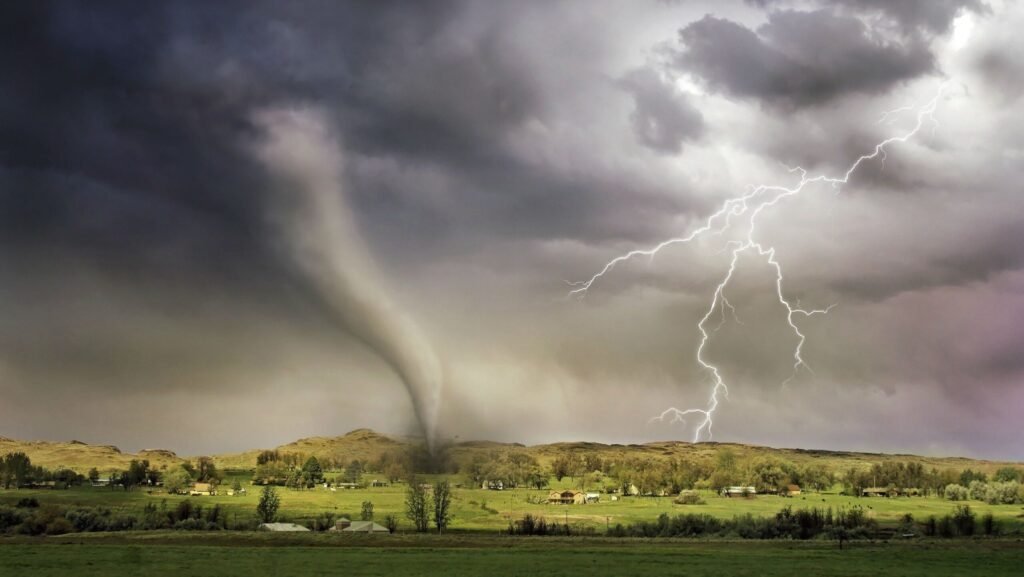
Then an EF3 tornado crossed into Lake County and tore through the Lady Lake area.
It was moving at about 50 miles an hour.
At its widest, the path reached roughly 450 yards across.
There was very little time for life to change.
And for many families, it changed forever.
The Storm Came While People Were Sleeping
There is something especially cruel about a tornado that comes before dawn.
During the day, there may be a strange sky to watch, neighbors outside, televisions on, phones in hands and some sense that the weather is changing.
At three o’clock in the morning, most people are sleeping.
That was one of the great dangers of the Groundhog Day tornado outbreak. The National Weather Service later emphasized how dangerous overnight tornadoes can be because so many people are asleep when warnings are issued.
A tornado warning for northern Lake County had been issued shortly after 3:00 a.m.
But warnings and clocks become frighteningly small things when a tornado is moving through the darkness at highway speed.
By the time the storm reached the Lady Lake area, homes were being torn apart.
The official storm record says 101 residences were destroyed and another 180 were damaged in Lake County by that first tornado.
Eight people died.
Ten more were injured.
Every one of the eight people who died in the Lady Lake tornado was inside a mobile home.
Those numbers tell us what happened.
They do not tell us what was lost.
Eight People
Weather records have to count people.
History needs to remember them.
The eight people killed in the Lady Lake tornado ranged in age from 17 to 92.
One was a 17-year-old girl.
Others had lived long lives, reaching their 70s, 80s and even 90s.
At 3:17 that morning, they were not statistics. They were people sleeping in their homes.
They were someone’s family.
Someone knew the sound of their laugh.
Someone knew which chair they usually sat in.
Someone expected to speak to them again.
Someone did not know that the last goodnight had already been said.
That is the part no damage survey can measure.
Meteorologists can give us the width of the tornado.
It can give us its speed.
They can count the destroyed houses.
There is no column for the empty place left at a family table.
The Tornado Moved On
After crossing Lady Lake, the tornado continued east-northeast before finally lifting near the Emeralda Marsh area.
The official Lake County portion of its track lasted only minutes.
Think about that.
A few minutes.
Enough time to destroy more than a hundred homes.
Enough time to kill eight people.
Enough time to divide the lives of entire families into before and after.
Then the tornado was gone.
But the storm was not finished.
The same supercell that had produced the Lady Lake tornado continued moving across Central Florida.
About 12 minutes after the first tornado lifted, another EF3 tornado touched down in rural Lake County.
It headed toward the Lake Mack and Paisley area.
Another community was about to experience the same nightmare.
Thirteen More Lives
The second tornado became even deadlier.
It struck the Lake Mack area before continuing east toward Volusia County.
Thirteen people died.
Children were among them.
They were 7, 9 and 15 years old.
There is no graceful way to write that.
There shouldn’t be.
Children are supposed to wake up the next morning.
They are supposed to complain about breakfast, look for something they misplaced, hurry for school, argue with a brother or sister, leave shoes where they don’t belong and grow up.
Parents are supposed to watch them become teenagers and adults.
Grandparents are supposed to tell stories about what they were like when they were little.
On February 2, some families never got those years.
By the end of the outbreak, 21 people had been killed, all of them in Lake County.
Twenty-one.
It is easy to read that number too quickly.
So don’t.
Twenty-one people went to bed the night before and did not live to see another morning.
Twenty-one families received news no family is ever ready to hear.
And around them were neighbors who survived, emergency workers who walked into scenes they would remember, people searching for loved ones and entire communities trying to understand what had happened before most of Florida had even finished breakfast.
A Storm More Than 70 Miles Long
The storm itself had begun farther west.
A long-lived supercell crossed Central Florida, producing multiple tornadoes along a damage path that stretched more than 70 miles, from around Sumter County through Lake County and eventually toward New Smyrna Beach.
The first tornado reached EF3 strength, with the National Weather Service estimating peak winds of roughly 155 to 160 mph.
The second EF3 was estimated even higher, at roughly 160 to 165 mph.
Later that morning, another tornado touched down near New Smyrna Beach before the storm finally moved offshore.
Meteorologists can explain what created it.
Warm, unstable air had settled over Central Florida ahead of an approaching cold front. A strong jet stream and powerful wind shear created the conditions necessary for thunderstorms to rotate.
Those details matter.
They help forecasters understand what happened and help communities prepare for the next storm.
But for the people who lived through that night, the science came attached to something far more personal.
A missing roof.
A crushed home.
A neighbor who wasn’t answering.
A familiar street that no longer looked familiar.
Morning Came Anyway
Perhaps one of the hardest things about disaster is that morning still comes.
The sun rises over the same lakes.
Birds eventually begin making noise.
People miles away pour coffee and start their cars and go to work, not yet knowing that somewhere nearby another family is standing in what remains of a home.
On February 2, 2007, daylight revealed what the darkness had hidden.
For some, there would be insurance claims, repairs and rebuilding.
For others, there would never be a repair that could put life back exactly where it had been the night before.
A house can be rebuilt.
A roof can be replaced.
Trees grow again.
A person cannot.
The Landscape Remembers, Even When It Looks Peaceful Again
Today, much of this part of Lake County is quiet again.
Roads run through neighborhoods.
Boats cross the lakes.
People play golf.
Families move into homes without knowing every piece of history beneath the streets around them.
The marshes and lakes look peaceful.
Near the eastern end of the Lady Lake tornado’s path lies the broader Emeralda Marsh and Lake Griffin landscape, a place defined today by water, trees, birds and wide Florida skies.
It is difficult to look at scenery that peaceful and imagine what crossed it in the darkness of February 2, 2007.
But peaceful places have histories too.
Sometimes the only sign is a story told by someone who was there.
A photograph saved in a drawer.
A rebuilt house.
An empty lot.
Or a family that still remembers exactly who should have been sitting beside them.
Twenty-One People, Not Twenty-One Statistics
Nearly every disaster eventually becomes a date.
February 2, 2007.
It becomes a name.
The Groundhog Day tornado outbreak.
It becomes an entry in a weather database.
EF3. 50 miles per hour. 450 yards wide. 21 fatalities.
We need those records. Without them, history becomes rumor and details disappear.
But sometimes the numbers make tragedy feel smaller instead of larger.
So perhaps the most important thing to remember about that morning is not the EF rating.
Not the width of the tornado.
Not how many miles it traveled.
Remember that while most of Central Florida slept, 21 people lost the rest of their lives.
Remember the 17-year-old girl in Lady Lake.
Remember the children who were 7, 9 and 15.
Remember the people who had already lived into their 80s and 90s and still had somebody who loved them enough to miss them.
Remember the families who woke to a world that had changed before sunrise.
And remember the survivors, because surviving does not mean walking away untouched.
Some storms last only minutes.
What they leave behind can remain for generations.
Today, there is a simple memorial in Lady Lake near U.S. 441. It does not try to overwhelm you. It simply tells what happened and gives the names of the 21 people who died in Lady Lake and Lake Mack that morning. Sometimes that is enough. A name is a reminder that every number in the storm record belonged to a person who had a life, a family, and people who still remember them.
Sources
- NOAA National Centers for Environmental Information, Storm Events Database: Lady Lake Tornado, February 2, 2007
- National Weather Service Melbourne, The Groundhog Day Tornado Outbreak, February 2, 2007
- National Weather Service Melbourne, historical storm surveys and Central Florida tornado research
Editorial Review
Reviewed by Claire Bennett, Managing Editor
Last reviewed: October 2026
Quick Answer Guide publishes practical, research-based answers to common questions about money, technology, health, travel, home improvement, and everyday life. Content is reviewed using official government resources, educational institutions, industry publications, and other authoritative sources when appropriate. Articles are updated periodically to improve accuracy and usefulness.