
A Surprise Beneath the Surface
The first time you see a manatee, it rarely happens the way you expect. Maybe you’re leaning over the rail of a dock, watching the water ripple in the afternoon sun, when a large gray shape rises silently from below. A rounded nose breaks the surface, takes a soft breath, and disappears again as if it were never there.
It’s a quiet moment — but unforgettable. And it’s one of the many reasons Florida’s waterways feel magical.
Manatees, often called sea cows, are among the Sunshine State’s most gentle and beloved residents. They move through lakes, rivers, canals, springs, and coastal waters with a calm, unhurried grace, grazing on underwater plants and surfacing every few minutes for air. Despite their size, they can be surprisingly difficult to spot, which makes each encounter feel like a small gift.
For visitors, seeing a manatee becomes a favorite Florida memory. For residents, it’s a reminder of the extraordinary wildlife living just beyond their backyards.
Getting to Know Florida’s Sea Cows
The nickname sea cow fits perfectly once you learn a little about manatees. Like cows grazing in a pasture, manatees spend much of their day eating — only their “pasture” is underwater. They feed on seagrasses and freshwater vegetation, using their flexible upper lips to grasp plants much like an elephant uses its trunk. (Not surprising, since manatees are distant relatives of elephants.)
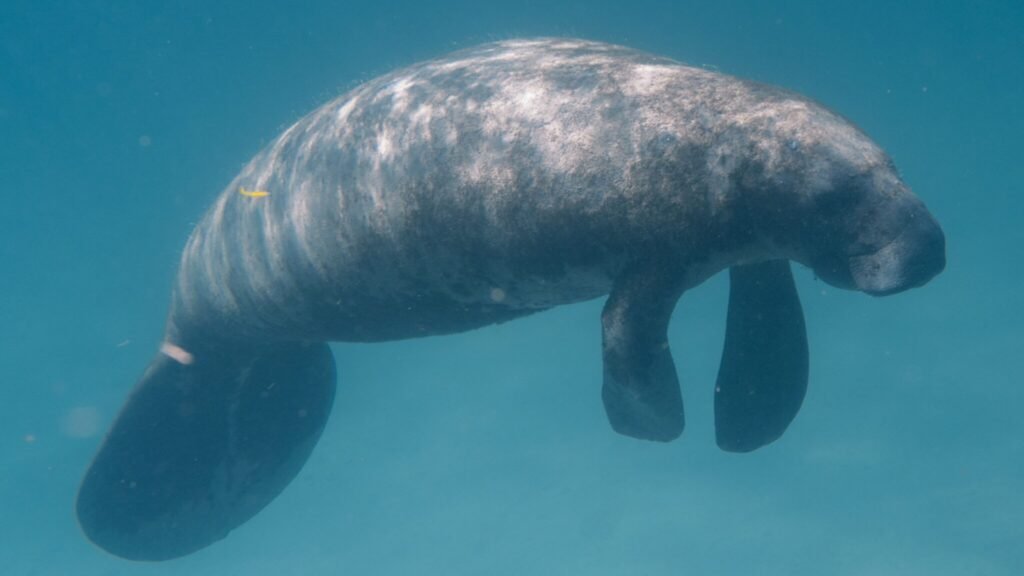
Adult Florida manatees typically measure 9 to 10 feet long and weigh around 1,000 pounds, though some grow even larger. Their rounded bodies, paddle-shaped tails, and small flippers give them an appearance unlike anything else in Florida’s waters.
Manatees are mammals, not fish. They breathe air, and mothers nurse their calves, often keeping them close for up to two years. Watching a mother and calf swim side by side is one of the sweetest sights in Florida’s waterways.
Despite their leisurely pace, manatees are capable swimmers, reaching speeds of up to 15 miles per hour for short bursts. They can also hold their breath for as long as 20 minutes when resting.
Where Do Manatees Go When Florida Gets Chilly?
Manatees don’t stay in one place year-round. They travel through Florida’s waterways as temperatures change, following warm water and abundant food.
During spring and summer, when water temperatures rise, manatees spread out into rivers, lakes, bays, canals, and coastal areas. Some travel north along the Atlantic Coast into Georgia and the Carolinas — a few have even been spotted as far north as Massachusetts. Others explore the Gulf Coast or remain in Florida’s inland waterways.
In Central Florida, manatees have been documented in the Harris Chain of Lakes, including Lake Griffin — a surprising sight for an animal often associated with the ocean.
But when cooler weather arrives, manatees begin searching for warmth. Because they lack the thick blubber that helps whales stay warm, water below about 68°F becomes dangerous for them.
Florida’s natural springs, which remain around 72°F year-round, become winter refuges. At Blue Spring State Park, hundreds of manatees may gather during cold spells. Crystal River and Kings Bay are also famous winter destinations. Some manatees even seek out warm water near power plants.
As temperatures rise in spring, they disperse again, each following its own route — sometimes alone, sometimes encountering other manatees along the way.
Where You Can See Manatees in Florida
One of the best things about Florida is that you don’t always need a tour or special equipment to see something remarkable. Sometimes all you need is patience and a good view of the water.
In clear rivers and springs, manatees may be visible from the shoreline. You might spot a large gray shape drifting beneath the surface, a broad tail sweeping gently, or a calf swimming close beside its mother.
Blue Spring State Park offers excellent viewing from its boardwalk, especially in winter when dozens of manatees gather in the clear spring run. Crystal River and Kings Bay provide similar opportunities, and manatees can also be found in the Florida Keys.
But they aren’t limited to famous springs. Manatees appear in ordinary lakes, canals, and rivers — sometimes passing behind waterfront homes or alongside docks. In murkier water, you may not see the animal itself at first. Instead, watch for a rounded nose breaking the surface or a series of circular ripples called manatee footprints.
And occasionally, they show up somewhere you’d never expect.
Yes, Even in a Navigation Lock
Florida’s navigation locks allow boats to travel between waterways with different water levels — like water elevators. Entering a lock is interesting enough on its own, but imagine discovering you’re not the only one waiting to pass through.
We’ve actually shared a navigation lock with a manatee. It was one of those unforgettable moments that makes boating in Florida so special. Manatees travel through connected waterways, and locks can be part of their journeys too.
It’s a wonderful reminder that Florida’s wildlife doesn’t always appear where you expect it.
Why So Many No Wake Signs?
If you’ve spent time boating in Florida, you’ve seen signs reading NO WAKE, IDLE SPEED, or SLOW SPEED. These aren’t just for shoreline protection — they’re also for manatees.
Despite their size, manatees can be almost invisible beneath the surface. They must surface regularly to breathe, placing them in the same areas where boats travel. A fast-moving boat may not give its operator enough time to spot a manatee ahead.
That’s why Florida has designated manatee protection zones with speed restrictions. Slowing down helps protect these gentle animals — and it also gives boaters more time to enjoy the scenery.
Florida’s Waterways Are Full of Surprises
Manatees aren’t the only wildlife sharing Florida’s waters. Dolphins travel in pods along the coast. Turtles rest on sunny banks. Fish of every shape and size move through the shallows. Herons and egrets hunt along the edges. Alligators may appear in freshwater areas.
A quiet stretch of water can suddenly come alive with activity. That’s part of what makes exploring Florida’s waterways so fascinating — there’s an entire world beneath the surface.
A Few More Fascinating Manatee Facts
- They can swim up to 15 mph in short bursts.
- They continually grow new molars that move forward as older teeth wear down.
- They can remain underwater for up to 20 minutes when resting.
- They move between freshwater, saltwater, and brackish water.
- They sometimes gather in groups, especially near warm water or plentiful food.
Clear water makes these gatherings especially enjoyable to watch.
Enjoying Manatees While Keeping Them Safe
Seeing a manatee in the wild is a wonderful experience, and protecting them is simple:
- Follow posted speed restrictions when boating.
- Watch carefully for animals near the surface.
- Give manatees plenty of space when viewing from shore.
- Never touch, chase, or feed them.
Manatees are protected wildlife, and keeping them wild is essential to their safety.
A Florida Memory You’ll Never Forget
Florida offers endless opportunities to encounter wildlife, often in the simplest places — a quiet lake, a shaded riverbank, a slow-moving canal.
Maybe you’ll spot a mother and calf drifting through clear spring water. Maybe you’ll notice a large gray shape rising for a breath. Or maybe, like us, you’ll find yourself sharing a navigation lock with one.
For visitors, seeing a manatee becomes a treasured Florida memory. For residents, it’s a reminder of the extraordinary world just outside their doors.
So the next time you’re walking beside a lake, exploring a spring, or enjoying a slow boat ride, take a moment to watch the water.
You never know what gentle shape might rise from beneath the surface — or what unforgettable moment waits around the next bend.