
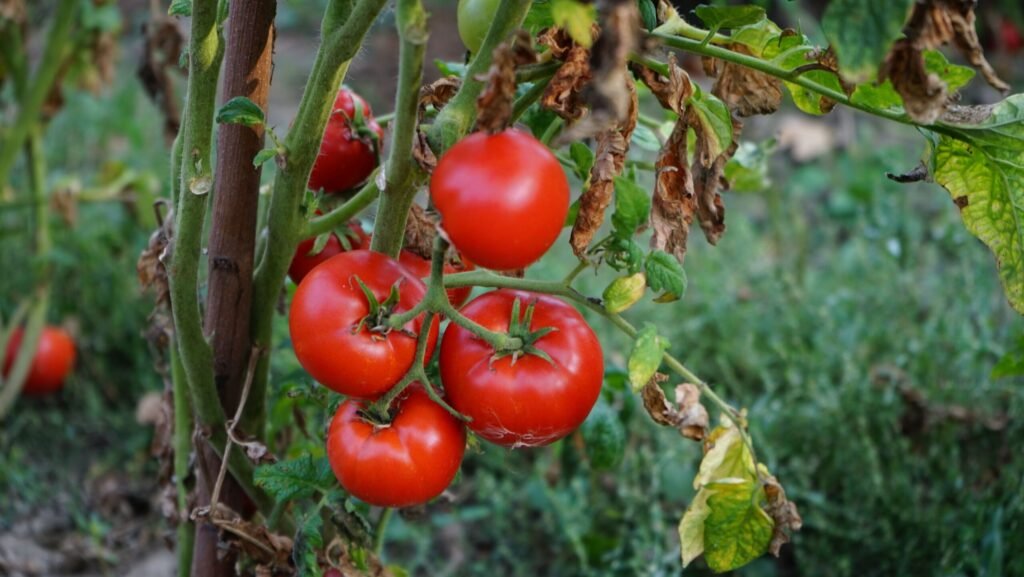
Growing a tomato from a tiny seed into a plant heavy with ripe fruit is one of the most rewarding parts of summer gardening—but it is not a quick process. Even an “early” tomato needs time to germinate, establish roots, produce flowers, set fruit, and ripen.
How long that takes depends largely on where you begin. A nursery transplant has already completed several weeks of growth, while a tomato started from seed may need four or five months to produce its first ripe fruit. Variety, temperature, sunlight, water, soil conditions, and the length of the local growing season can all move the harvest date forward or backward.
Quick Answer
Most tomato varieties produce their first ripe fruit approximately 55 to 100 days after a healthy transplant is planted outdoors. Many common varieties fall within the 65- to 85-day range.
When tomatoes are started from seed, the complete process usually takes approximately 100 to 150 days. This includes about six to eight weeks of indoor seedling growth followed by the variety’s outdoor growing and ripening period.
Early cherry and compact varieties may produce sooner, while large beefsteak, heirloom, and other long-season tomatoes commonly take longer.
Typical Tomato-Growing Timeline
| Starting Point/Growth Stage | Approximate Time |
|---|---|
| Seed germination | 5 to 10 days |
| Indoor seedling growth | 6 to 8 weeks |
| Hardening off seedlings | 1 to 2 weeks |
| Transplant to first flowers | Approximately 3 to 6 weeks |
| Flower to ripe tomato | Approximately 25 to 45 days |
| Transplant to first harvest | 55 to 100 days |
| Seed to first harvest | Approximately 100 to 150 days |
These stages overlap, and weather can cause substantial variation. A plant may also continue producing tomatoes for weeks or months after the first fruit ripens.
Understanding “Days to Maturity”
The number printed on a tomato seed packet or plant label is often called “days to maturity” or “days to harvest.”
For tomatoes, this number commonly refers to the estimated time between transplanting a seedling into the garden and harvesting the first ripe fruit. It generally does not include the six to eight weeks needed to grow the transplant from seed.
For example, a tomato labeled “75 days” may require:
- 6 to 8 weeks of indoor seedling growth
- A hardening-off period
- Approximately 75 additional days in the garden
That can place the first harvest approximately 120 to 140 days after the seed was originally sown.
Seed companies do not all calculate maturity dates identically. Always read the complete variety description to determine where its count begins.
How Long Do Tomatoes Take to Grow From Seed?
Starting tomatoes from seed offers access to far more varieties than most garden centers carry, including unusual heirlooms, regionally adapted cultivars, and tomatoes bred for particular colors, flavors, or uses.
The tradeoff is a longer growing period.
Germination: Approximately 5 to 10 Days
Tomato seeds germinate most reliably in warm growing media. Under favorable conditions, seedlings commonly emerge within five to ten days. Cooler conditions can delay germination, and cold, saturated growing mix may cause seeds to rot.
A seedling heat mat can help maintain a consistent temperature, but it should be monitored because warm growing media dry out more quickly.
Indoor Seedling Growth: Approximately 6 to 8 Weeks
Tomato seedlings are generally started indoors about six to eight weeks before they can safely be planted outside.
They need strong overhead light to develop sturdy stems. Insufficient light produces tall, pale, stretched seedlings that may take longer to recover after transplanting.
Starting seeds much earlier does not necessarily result in an earlier harvest. Overgrown, root-bound, or flowering transplants can experience more stress when moved into the garden.
Hardening Off: Approximately 1 to 2 Weeks
Indoor-grown seedlings must adjust gradually to outdoor sunlight, wind, and changing temperatures. This process is known as hardening off.
Begin by placing seedlings outdoors in a sheltered location for a short period, then gradually increase their exposure. Moving tender seedlings directly from indoor conditions into full sun can scorch the foliage and interrupt growth.
Outdoor Growth and Fruit Production: Approximately 55 to 100 Days
Once planted in the garden, the remaining timeline depends on the cultivar and growing conditions.
Early varieties may ripen in fewer than 60 days after transplanting. Many main-season tomatoes need 70 to 85 days, while large or late-season cultivars may require 90 to 100 days or longer.
How Long Do Tomatoes Take to Grow From Starter Plants?
Nursery transplants are the most common choice for home gardeners because they remove the indoor seed-starting period from the timeline.
A healthy transplant planted at the proper time may produce ripe tomatoes in approximately 55 to 100 days. The number of days listed on the label should provide a closer estimate for that particular variety.
Choose compact, sturdy plants with healthy green leaves and well-developed roots. The largest transplant is not necessarily the best one. Tall, crowded, root-bound, or heavily flowering plants may take longer to establish than smaller, stockier plants.
Plants that already have flowers or small tomatoes are not guaranteed to produce the earliest harvest. Transplant stress can cause flowers or young fruit to drop.
Tomato Types and Approximate Growing Times
Fruit size can influence ripening time, but it is not a dependable rule by itself. Some cherry tomatoes are early, while others are long-season plants. Likewise, not every beefsteak takes 100 days.
The cultivar’s stated days to maturity is the most reliable estimate.
| Tomato type | Common approximate time from transplant |
| Early-season tomatoes | 50 to 65 days |
| Cherry and grape tomatoes | 55 to 75 days |
| Plum and Roma-type tomatoes | 70 to 85 days |
| Medium slicing tomatoes | 65 to 85 days |
| Large slicing and beefsteak tomatoes | 75 to 100 days or longer |
| Many heirloom tomatoes | 75 to 100 days or longer |
Cherry and Grape Tomatoes
Many cherry and grape tomatoes begin ripening approximately 55 to 75 days after transplanting. Their small fruit can ripen relatively quickly, and some varieties produce large clusters over an extended season.
However, cherry tomatoes are not automatically the earliest. Check the maturity date for the particular cultivar.
Plum and Roma Tomatoes
Plum tomatoes, often called paste or Roma-type tomatoes, commonly mature approximately 70 to 85 days after transplanting. Their dense flesh and lower moisture content make them popular for sauces, canning, and cooking.
Many paste tomatoes are determinate and produce much of their crop during a concentrated harvest period, but others are indeterminate.
Slicing Tomatoes
Medium round slicing tomatoes often begin ripening in approximately 65 to 85 days. This broad group includes early hybrids, main-season varieties, and many heirlooms.
Beefsteak Tomatoes
Large beefsteak tomatoes frequently need 75 to 100 days or longer. The plant must support and ripen considerably larger fruit, and some of the most popular heirloom beefsteaks are naturally late-season varieties.
Gardeners in short-season climates should look for beefsteak-type cultivars specifically bred for earlier maturity.
Determinate vs. Indeterminate Tomatoes
Growth habit affects the timing and length of the harvest.
Determinate Tomatoes
Determinate tomatoes grow to a relatively fixed size and produce much of their crop within a concentrated period. These are often called bush tomatoes.
They work well for:
- Small gardens
- Containers
- Gardeners who want a concentrated harvest
- Sauce or canning projects
- Areas with shorter growing seasons
Determinate plants do not necessarily ripen sooner, but many early varieties have a determinate growth habit.
Indeterminate Tomatoes
Indeterminate tomatoes continue growing, flowering, and producing fruit until frost, disease, or severe weather ends the season.
They usually require sturdy cages, stakes, or trellises and may grow quite tall. Their first tomatoes may ripen on a schedule similar to determinate varieties, but the harvest continues much longer.
Many cherry, beefsteak, and heirloom tomatoes are indeterminate.
How Long Does It Take a Tomato to Grow After Flowering?
After a flower is successfully pollinated, a small green tomato begins to form. Under favorable conditions, the fruit may take approximately 25 to 45 days to reach a harvestable stage.
Temperature and variety strongly influence this period. Small tomatoes generally reach full size sooner than very large fruit, but ripening may stall during extremely hot or cool weather.
Not every flower becomes a tomato. Poor fruit set can occur when:
- Nights are too cold
- Days or nights are excessively hot
- The soil becomes too dry
- Humidity interferes with pollen release
- The plant is under stress
- Flowers are not adequately vibrated by wind or pollinator activity
Tomato flowers are self-pollinating, meaning each flower contains the parts needed for pollination. Outdoors, wind movement and visiting insects normally provide enough vibration to release the pollen.
What Helps Tomatoes Grow on Schedule?
Good growing conditions cannot turn a 90-day tomato into a 60-day variety, but they can prevent avoidable delays.
Provide Plenty of Sunlight
Tomatoes should receive at least six hours of direct sunlight daily, although eight hours or more generally supports stronger growth and better fruit production.
In cool or short-season regions, choose the sunniest and warmest appropriate location available. In extremely hot climates, some late-afternoon protection can reduce heat stress and sunscald, but excessive shade will reduce flowering and fruit production.
Wait for Warm Conditions
Tomatoes are warm-season plants and should not be rushed into cold soil simply because the daytime air feels warm.
Cold soil slows root establishment and nutrient uptake. A late frost can seriously damage or kill an unprotected plant.
Tomatoes generally perform best when daytime temperatures are warm and nighttime temperatures remain above approximately 60°F. Their growth and fruit set may slow when conditions fall well outside that range.
Maintain Consistent Soil Moisture
Tomatoes grow best when the soil remains evenly moist but not waterlogged.
Alternating between very dry and very wet soil can contribute to:
- Fruit cracking
- Blossom-end rot
- Flower or fruit drop
- Irregular growth
- Reduced fruit quality
Water deeply enough to moisten the root zone rather than repeatedly wetting only the surface. Containers may require daily attention during hot or windy weather.
A layer of mulch helps retain soil moisture, moderate soil temperature, and reduce soil splashing onto the foliage.
Use Well-Drained Soil
Tomatoes tolerate several soil types but perform best in fertile, well-drained soil containing organic matter. Soil that stays saturated deprives roots of oxygen and increases the risk of root disease.
A soil test can identify pH problems and nutrient deficiencies. Tomatoes generally perform well in slightly acidic soil, commonly around pH 6.0 to 6.8.
Avoid Excessive Nitrogen
Too much nitrogen can produce an impressive green plant with few flowers or tomatoes. Fertilizer should be based on soil conditions and product directions rather than the assumption that more fertilizer creates faster growth.
Support Plants Early
Install stakes, cages, or trellises at or soon after planting. Supporting plants keeps foliage and fruit away from the soil, improves air circulation, and makes harvesting easier.
Trying to force a large, sprawling plant into a support later can break stems and disturb roots.
How Climate Affects Tomato-Growing Time
A nationwide tomato timeline must account for very different growing conditions.
Northern and Short-Season Climates
Gardeners with short summers should choose early-maturing cultivars and start seeds indoors. Row covers, walls that reflect warmth, and protected planting locations can help young plants establish, but covers must be removed or vented when temperatures rise.
A 90- or 100-day tomato may not ripen reliably before fall frost in a short-season area.
Hot Southern Climates
In areas with very hot summers, spring and fall may provide better tomato-growing conditions than midsummer.
Sustained high temperatures can reduce flower fertilization and delay the development of red color. Plants may remain alive and resume setting fruit when temperatures become more moderate.
Coastal and High-Elevation Areas
Cool nights and cool soil can delay tomato growth even when daytime weather seems pleasant. Early cultivars and protected, sunny planting locations are particularly valuable in these regions.
Mild and Frost-Free Regions
Tomatoes may grow for an extended period where frost is rare, but intense heat, humidity, pests, and disease can still limit production. The absence of frost does not guarantee year-round fruit.
When Are Tomatoes Ready to Pick?
A ripe tomato should have reached the mature color expected for its variety. That may be red, pink, orange, yellow, purple, striped, or even green.
Common signs include:
- The fruit has developed its expected mature color
- The skin has changed from a hard, dull appearance to a mature sheen
- The tomato feels firm with a slight amount of give
- The fruit has reached the expected size for the variety
- Its flavor and aroma have developed
Do not rely solely on whether the tomato separates easily from the vine. Some varieties release readily, while others remain firmly attached even when ripe. Support the fruit and twist gently, or use clean garden snips to avoid damaging the plant.
Can Tomatoes Ripen After They Are Picked?
Tomatoes can continue ripening after harvest once they have reached physiological maturity.
A tomato at the breaker stage—when the first noticeable change from green to its mature color appears—can finish ripening indoors. Place it at room temperature and out of direct sunlight.
A mature green tomato may also ripen successfully if it has reached full size and begun internal development. A small, hard, immature tomato harvested too early may never develop acceptable flavor or texture.
Tomatoes do not need sunlight to ripen after harvest. Temperature is more important. Keeping them in direct sun can cause excessive heating and deterioration.
Picking at the breaker stage may be helpful when:
- Temperatures remain extremely hot
- Frost is approaching
- Heavy rain may cause cracking
- Birds, squirrels, or insects are damaging fruit
- The tomato is likely to fall or become bruised
Why Are My Tomatoes Growing So Slowly?
A delayed harvest does not always mean something is wrong. The variety may simply need more time.
Common causes of slow growth or ripening include:
Cool Temperatures
Cold soil and cool nights slow root development, flowering, fruit set, and ripening. Plants set out too early may remain nearly unchanged until the weather warms.
Excessive Heat
High temperatures can cause blossoms to drop without setting fruit. Sustained heat can also slow the development of red pigments, leaving mature tomatoes green or yellow-orange for an extended period.
Too Little Sunlight
Plants in too much shade may develop long stems and abundant foliage but produce fewer flowers and smaller harvests.
Inconsistent Watering
Drought stress can interrupt growth and cause flowers or young fruit to drop. Overwatering or poorly drained soil can injure the roots and produce similar aboveground symptoms.
Too Much Fertilizer
Excessive nitrogen encourages leaves and stems at the expense of flowers and fruit.
Transplant Stress
Root-bound plants, inadequate hardening off, sudden temperature changes, or root damage during planting can temporarily stop growth.
Heavy Fruit Load
A plant supporting many tomatoes may ripen individual fruit more slowly than one carrying a lighter crop.
Pest or Disease Problems
Leaf spots, wilts, root diseases, hornworms, aphids, whiteflies, and other problems can reduce the plant’s ability to support and ripen fruit.
Can You Make Tomatoes Grow Faster?
You cannot change the basic maturity period of a tomato variety, but you can select an earlier cultivar and prevent environmental delays.
For the earliest practical harvest:
- Choose a variety with fewer days to maturity
- Start seeds indoors at the recommended time
- Use healthy, stocky transplants
- Harden seedlings off gradually
- Wait until the soil and weather are warm enough
- Plant in a location receiving ample sunlight
- Maintain even soil moisture
- Use mulch after the soil has warmed
- Install supports at planting
- Avoid excessive nitrogen fertilizer
- Monitor plants for pests and disease
- Choose cultivars suited to the local climate
Starting seeds extremely early, purchasing an oversized transplant, or overfertilizing will not necessarily produce tomatoes sooner.
Related Posts
Explore these related gardening and outdoor home-improvement guides:
- How Long Does It Take to Mow a Lawn?
- How Long Does It Take Orchids to Bloom?
- How Long Does It Take to Install a Fence?
- How Long Does It Take Flowers to Bloom?
Frequently Asked Questions
How long does it take to grow a tomato from seed?
It generally takes approximately 100 to 150 days from sowing the seed to harvesting the first ripe tomato. The variety, seedling period, planting date, and outdoor growing conditions affect the total.
How long do tomatoes take to grow after transplanting?
Most varieties need approximately 55 to 100 days after transplanting. Many commonly grown tomatoes fall within the 65- to 85-day range.
Can tomatoes grow in 60 days?
Some early-season and compact tomato varieties can produce ripe fruit approximately 50 to 60 days after transplanting. This does not include the time required to grow the transplant from seed.
How long after flowering do tomatoes appear?
A very small green fruit may become visible within several days after successful pollination. Reaching maturity and ripening commonly takes another 25 to 45 days, depending on the variety and temperature.
Why are my tomatoes staying green?
The tomatoes may still be immature, or cool weather may be slowing development. Prolonged high temperatures can also interfere with normal color formation, even when the fruit has reached full size.
Do cherry tomatoes grow faster than large tomatoes?
Many cherry tomatoes mature earlier because their fruit is smaller, but this is not always the case. The cultivar’s listed days to maturity provides a more dependable estimate than fruit size alone.
Do tomatoes ripen faster on or off the vine?
Once a tomato reaches the breaker stage, it can finish ripening off the vine at room temperature. Temperature has more influence on ripening speed than whether the fruit remains attached to the plant.
How late can tomatoes be planted?
Count backward from the area’s typical first fall frost using the cultivar’s days to maturity, then allow additional time for establishment and slower late-season growth. In hot climates, a later planting may produce a fall crop after extreme summer heat subsides.
Quick Summary
Most tomatoes produce ripe fruit approximately 55 to 100 days after a transplant is planted outdoors. When the six- to eight-week seedling period is included, growing tomatoes from seed commonly takes about 100 to 150 days.
Early cultivars may produce in fewer than 60 days after transplanting, while large beefsteak, heirloom, and other long-season varieties may need 90 to 100 days or longer. The maturity date listed for the individual cultivar is more reliable than estimating by tomato size alone.
Warm conditions, ample sunlight, consistent moisture, well-drained soil, and appropriate nutrition help plants remain on schedule. Cold soil, extreme heat, shade, water stress, excessive nitrogen, and pest or disease problems can delay flowering, fruit set, and ripening.
Sources & References
- University of Minnesota Extension — Growing Tomatoes in Home Gardens
- University of Illinois Extension — Tomato
- Oregon State University Extension — Grow Your Own Tomatoes and Tomatillos
- Penn State Extension — Tomatoes: From Seedlings to Fruit
- Utah State University Extension — Tomatoes in the Garden
- University of Georgia Extension — Commercial Tomato Production Handbook
- University of Arkansas Cooperative Extension — How to Grow Tomatoes in Arkansas
- Colorado State University Extension — Growing Tomatoes
- Texas A&M AgriLife Extension — How to Store Tomatoes
- University of California, Davis — Tomato Produce Facts
Editorial Review
Reviewed by Claire Bennett, Managing Editor
Last reviewed: July 2026
Quick Answer Guide publishes practical, research-based information designed to help readers understand everyday timelines and make informed decisions. Each article is developed using authoritative sources, including government agencies, universities, Cooperative Extension programs, professional organizations, and recognized industry publications.
Articles are reviewed for clarity, accuracy, and usefulness and are updated periodically as new information becomes available. Gardening timelines are presented as general estimates because plant variety, climate, weather, soil conditions, and growing practices can affect individual results.